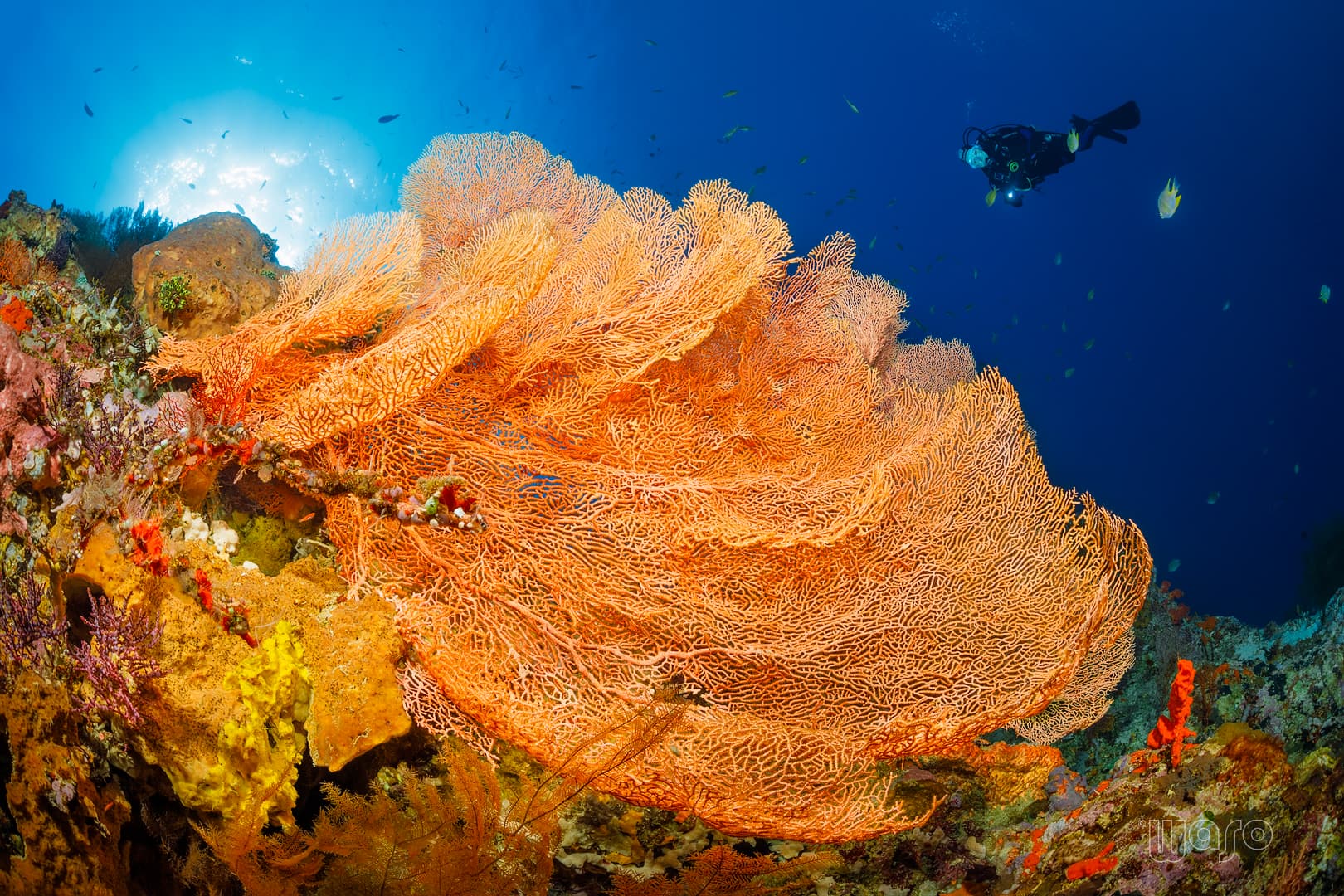
Menjangan Island · West Bali National Park
Bat Cave is named for the small underwater caverns and overhangs that punctuate the wall along the southern side of Menjangan Island. The dive is a slow descent and a slower swim — the reward is in what you find inside the crevices, not what you cover in metres. It’s widely considered one of the best macro sites at Menjangan, with reliable nudibranch, shrimp, and pygmy seahorse sightings on any given dive. The wall itself is healthy and the visibility is consistent, so even if macro isn’t your usual focus, the framing of light coming through the overhangs makes for striking wide-angle work.
This is a dive that rewards patience. Every overhang holds something — check inside crevices for cleaner shrimp on coral whips, scan gorgonian fans for pygmy seahorses, and look for nudibranchs feeding on the sponges. The caverns themselves are too small to swim into but big enough to peek into with a torch. Common sightings include:
Macro photographers and divers who like to slow down and search. A torch is genuinely useful here for lighting up the inside of overhangs — bring one if you have it, or borrow one from us. The site is also a good fit for newer divers building observation skills: depth is forgiving, current is rare, and there’s always something small to point at. Repeat divers often report seeing different species on consecutive visits, since the wall is large enough that no two dives cover the same crevices in detail.
Menjangan’s dry season (April–November) brings the best visibility and surface conditions. Bat Cave sits inside West Bali National Park, so a park entrance fee applies (already included in our Menjangan day-trip prices). Sundays and public holidays carry a small park surcharge. We typically run Bat Cave as a second or third dive of the day — the macro focus pairs well with a longer surface interval and warm coffee on the boat between dives. Our 1:4 guide-to-diver ratio means you’ll have someone pointing out the small stuff you might otherwise miss, and our guides know the wall well enough to find species most divers walk past.